

Any pain in the tooth, either acute or long-lasting, can be a definite warning that your body is trying to inform you of something serious. Though one can expect tooth pain at some point, severe or long-standing tooth pain indicates there’s an infection and requires attention from a dentist. A root canal procedure is generally used to treat patients with severe infections or deep tooth decay. Are you worried that you might require a root canal? Many people avoid visiting a dentist due to fear or confusion about dental procedures, but knowing whether a tooth needs root canal treatment can help you save the tooth and avoid further damage and pain.
In this blog, we will enlighten you about a few symptoms and signs that may indicate you require root canal treatment, and how an immediate treatment can help protect your smile.
What Is Root Canal Treatment?
Root canal treatment is a procedure designed to repair and save a tooth that is severely decayed or infected. This dental treatment focuses on cleaning and disinfecting the root canals (the inner chambers of the tooth) and removing infected tissue. The goal is to eliminate pain and prevent further damage, which could otherwise lead to tooth loss.
If you’re feeling pain when chewing, swelling in the gums, or tenderness around a specific tooth, it could be time to schedule an appointment for a root canal treatment in Burien, WA.
Common Signs You May Need Root Canal Therapy
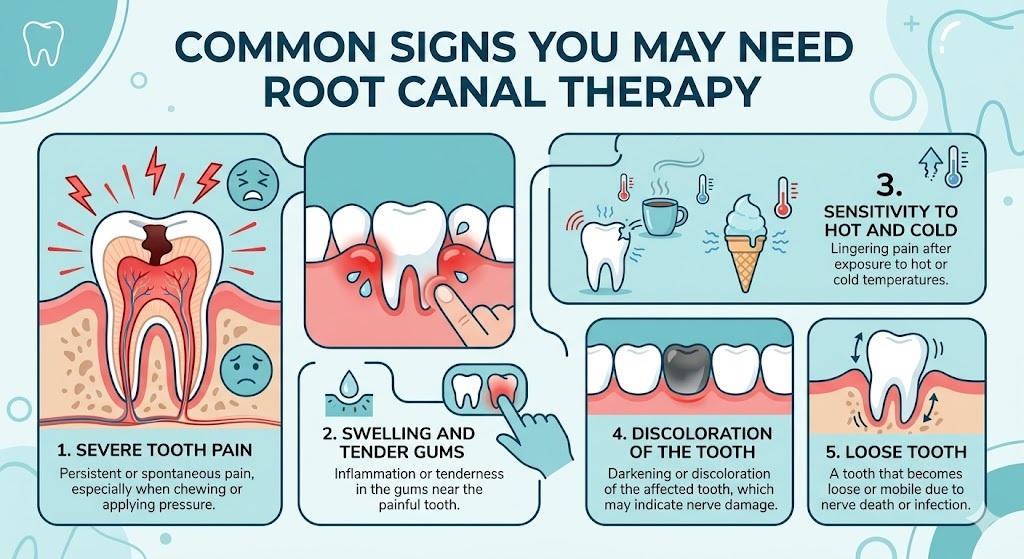
The signs that show you need to consider a root canal are very few, but are indicative:
- Severe Tooth Pain: You must seek an immediate attention if you suffer from chronic pain or acute pain in your tooth while chewing anything hard. Such tooth pain will feel like a throbbing sensation and will be so severe that your usual painkiller will not be effective.
- Swelling and Tender Gums: When there is swelling and soreness around a tooth, which may also include a bump on the gum that emits pus, it indicates that the root has been infected. In such a case, a root canal procedure is highly recommended to treat the infection and protect your tooth from further decay that may be beyond repair.
- Sensitivity to Hot and Cold: When a person experiences prolonged sensitivity to hot and cold foods after eating, it suggests that the tooth’s nerves have been damaged. However, in some cases, sensitivity can also occur when a tooth comes in contact with heat or cold and vanishes soon after. But when it takes longer than usual for the pain to disappear, you should consult a dentist for a root canal.
- Discoloration of the Tooth: A dark or discolored tooth indicates that your pulp (the tissue in the center of the tooth, which holds the nerves and blood vessels) has become damaged or dead.
- Loose Tooth: If a tooth has become loose, it means infection has already reached the bone surrounding the tooth, making the tooth unsteady.
The Root Canal Process: What to Expect
If you are experiencing one or more of the symptoms above, your dentist may recommend a root canal. During a root canal procedure, the tooth is numbed, ensuring that you will not feel pain.
- Initial Consultation: When evaluating an infected or decayed tooth, your dentist will order an X-ray to assess the extent of damage or infection and determine whether a root canal is needed.
- Cleaning and disinfection: The numbed tooth will be drilled to create an opening, and the infected pulp will be removed and disinfected.
- Sealing the Tooth: The tooth is then filled with a biocompatible material to seal it and prevent another infection.
- Placing a Crown: A dental crown is often fitted on a tooth to prevent further infection and preserve its strength.
Why Root Canal Treatment is Essential
When a tooth becomes infected, it is crucial to get the root canal treatment in Burien, WA as soon as possible. If left untreated, the infection can spread from the tooth and surrounding gum tissue to the jawbone. When it reaches this stage, it can cause dental abscesses, bone loss, and eventual tooth loss, which in turn can lead to severe health issues, as an entire part of the infection could then enter the bloodstream. A root canal helps save a tooth.
Saving a tooth means no additional health issues arise, as you do not have to replace missing teeth or have gaps in your smile. Root canal treatment will stop pain and restore tooth function, which is why teeth are so important in the first place. Root canal therapy is a very safe and reliable procedure performed regularly by dental professionals.
Don’t Ignore the Signs—Get Help Today
If you’re experiencing pain, swelling, or other signs of tooth infection, don’t wait to get help. Schedule a consultation to have your tooth assessed today with our dentists in Burien, WA.
Conclusion: Protect Your Smile with Root Canal Treatment
The pain, swollen gums, and tenderness are symptoms you must address now. At All About Dental, we pride ourselves on the care we provide, ensuring every patient feels more comfortable and stress-free throughout the procedure. Visit our dentist’s office in Burien, WA, for root canal treatment to restore your smile!
Call today to set up your appointment for a consultation for a root canal procedure at All About Dental!
Common Questions People Ask
1. What are the common signs that I need a root canal?
Common signs include severe tooth pain, sensitivity to heat or cold, swollen gums, and tooth discoloration.
2. How long does a root canal treatment take?
Root canal treatments typically take one to two hours, depending on the severity of the infection.
3. Is root canal therapy painful?
Root canal treatment is performed under local anesthesia to ensure you remain comfortable during the procedure.
4. Can a root canal save a tooth that is severely decayed?
Yes, a root canal can save a severely decayed or infected tooth and restore its function.
Related Articles
Schedule an Appointment Today
Schedule your appointment today to experience personalized dental care tailored to your needs. Our dental team is ready to assist you in maintaining optimal oral health. Contact us to book your visit and discover how we prioritize your comfort and wellbeing. Take the first step towards a healthier smile with our comprehensive dental services in Burien, Washington, are designed to meet your individual dental health goals.